Teaching and Mentoring
I teach at the University of Colorado Boulder
I hold a part-time appointment at University of Colorado Boulder where I teach introductory molecular biology classes, and future Science Communication for STEM majors courses, as part of the Division of Continuing Education. Since I teach through continuing education, I get to work with a variety of students, from traditional degree seeking students looking for additional flexibility with the coursework to post-baccalaureate students preparing for additional school or interested in making a career change.
My teaching philosophy is founded on bringing the real world into the classroom, equipping students with the skills to succeed in class by grounding the class in educational neuroscience, and using evidence-based course design. I firmly believe in the power of biology education to make a positive impact on the world and creating an educational experience that is meaningful and useful to students long after the semester ends.
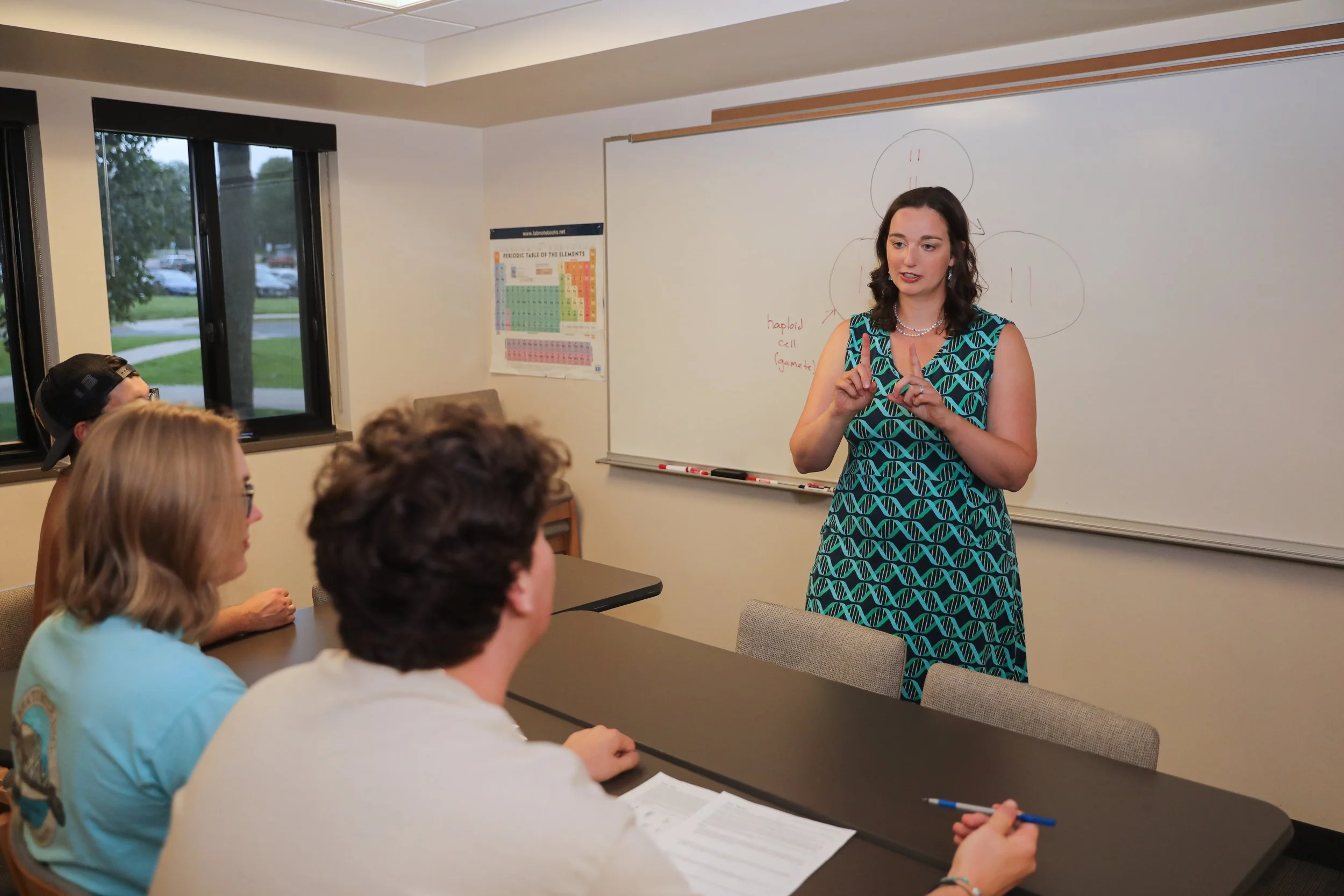
Dr. Peffer is an engaging and passionate educator. In the classroom, she ties difficult biology concepts to important everyday issues, as well as connecting with students to best support them in their academic journey.
Aidan Olsson, former student
I have yet to take a class that even approaches the level of real-world applicability learned in these courses. This is, due to Dr. Peffer's strengths in connecting complex science concepts from the macro scale to the micro: from active societal conflicts to personal applications.
Benjamin Weiss, former student
The learning strategies she imparted when I was 18 continue to serve me today, six years later, as a medical student. Dr. Peffer was truly a pillar in my education and the key to both my personal and professional success.
Anika Tomlinson, former student
Online Course Offerings through Coursera
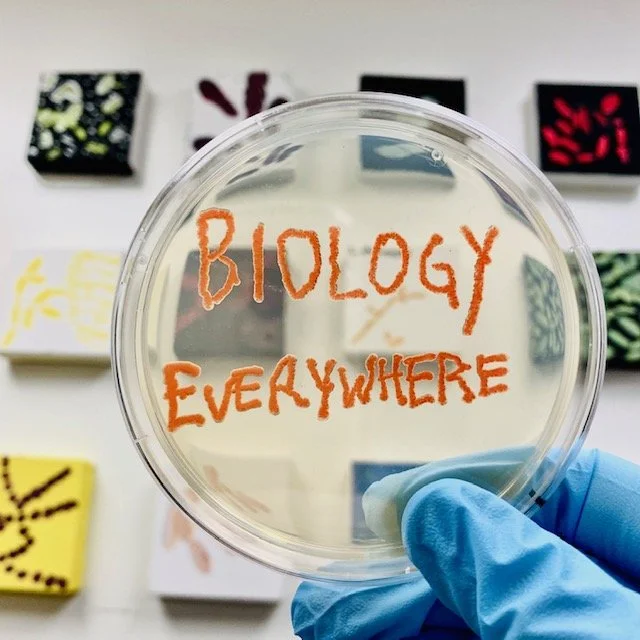
Biology Everywhere
I collaborated with the Office of Academic and Learning Innovation at University of Colorado Boulder to create two specializations (and 8 courses) on Coursera.
My first specialization, Biology Everywhere, is based on my book, Biology Everywhere.
This course covers topics such as cell biology, conservation, and genetics as they apply to your daily life. The course touches on current biological issues in today’s society, while also relating the study of biology to other fields, such as business, art, and chemistry.
Since its launch in 2020, over 20,000 people around the world have enrolled in this course!, with around a third of those who initially sign up completing one of the courses
The refreshed Biology Everywhere course launches in Fall 2026!
Designing Effective Science Communication
My second specialization and mini course, Designing Effective Science Communication, are about evidence-based science communication.
Topics include applying principles of human learning in the design of science outreach, modalities for science communication/outreach, dealing with mis/disinformation, non-verbal communication, authenticity, and more!
Over 10,000 people from around the world have enrolled in one of my science-communication courses from around the world!
The science communication course offerings are undergoing a refresh in Fall 2026, and will relaunch in late 2026/early 2027!
In my experience, Dr. Peffer is a deeply devoted educator, passionate about the opportunity education presents to make science and scientific thinking accessible and approachable to audiences of varying age and experience.
Dr. Peffer is the best kind of educator: honest, caring, and generous with her abilities, which extend well beyond the classroom and the laboratory. In fact, Dr. Peffer is uniquely equipped to do the work of science communication and literacy in the public sphere, across a range of domains in and outside of the academy.
Christopher Haynes, Director at Coursera
What’s most notable about Dr. Peffer’s institutional personal investment is the time that she spends with her students after class. Whether one-on-one or small group extra instruction, it is a pleasure to observe how she intimately connects with students.
Dr. Peffer is clearly a foundational and experienced undergraduate instructor with a wealth of experience and her students benefit immensely. Dr. Peffer is an institutional asset.
Her experience, passion for teaching, demonstrated competence within her field and general affection for her students represent some of the finest instructional characteristics that I’ve encountered in my 15 years of teaching. She’s absolutely top notch.
Dr. Carl Hager, Teaching Assistant Professor Environmental and Natural Sciences University of Colorado Boulder
Melanie is skilled at designing courses of all types, from in-person to online, integrating her research on student learning into her pedagogy. She works effectively with colleagues, and is an excellent mentor. She's quick to learn new approaches and has creative ideas for engaging others in science.
Jennifer Knight, Associate Professor at University of Colorado
Research Interests and Mentoring
In addition to my affiliation with Division of Continuing Education at the University of Colorado Boulder, I am also a research scientist within the Institute of Cognitive Science.
My research interests integrate my molecular biology and learning sciences backgrounds to take an interdisciplinary approach to understanding teaching and learning within educational contexts, including formal classroom learning and informal/science communication spaces.
In addition, I mentor a team of undergraduate students on their independent research projects, including serving as the advisor on honors theses. One of our current projects is investigating the impact of direct instruction on evidence-based study strategies on improving student performance in first-year biology classes. We are also examining if our intervention promotes equity among biology students by closing achievement gaps between minorized/disadvantaged groups and non-minoritized/non-disadvantaged groups.
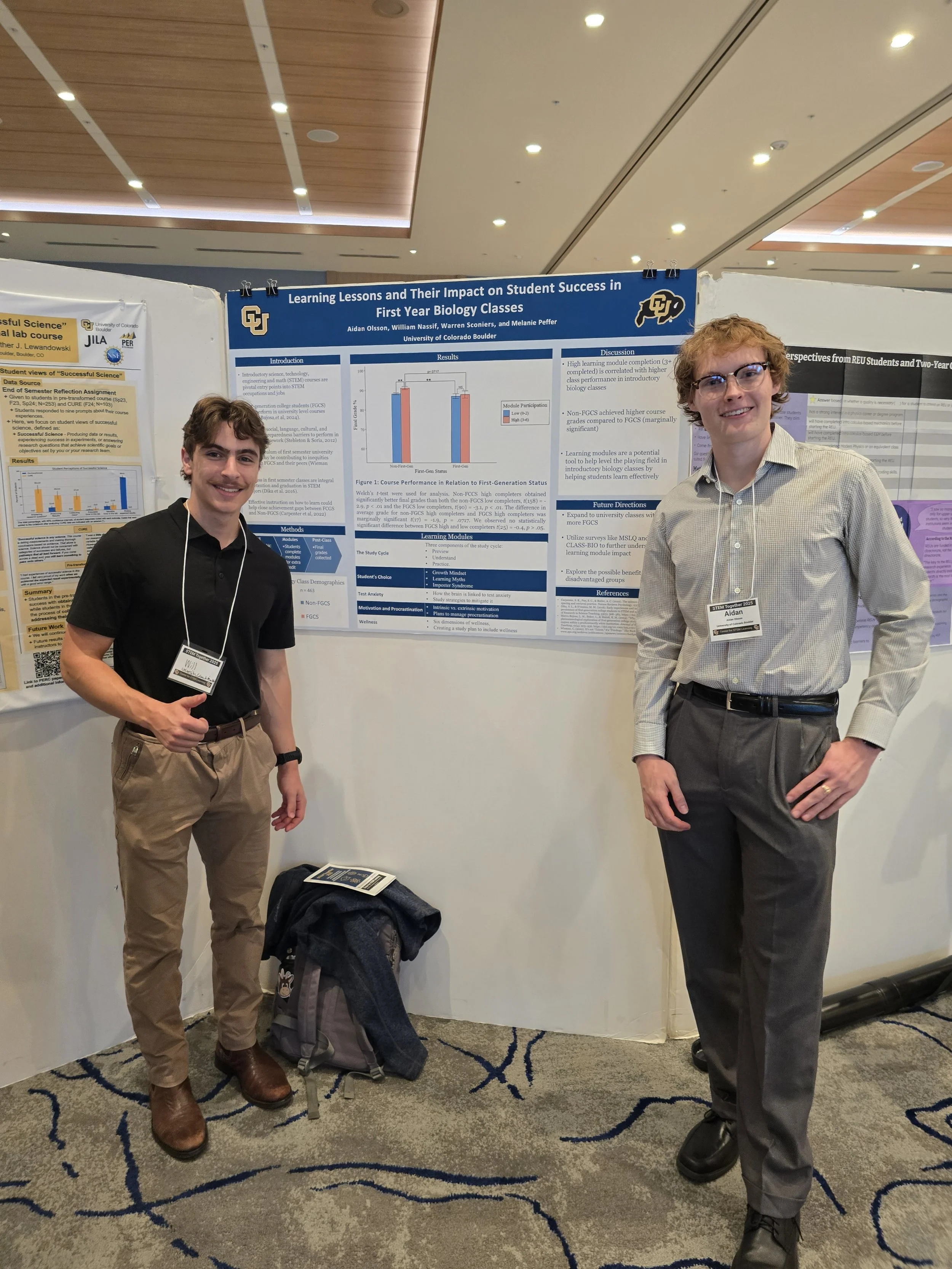
Two of my students presenting their research at the CU’s Center for STEM Learning annual symposium in Fall 2025.
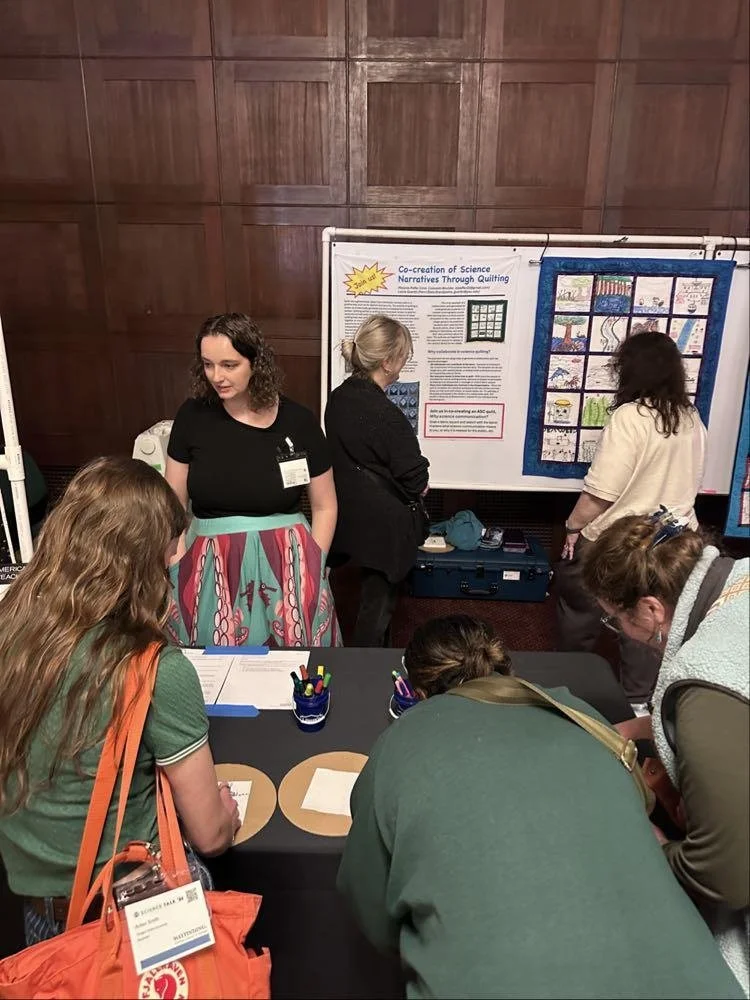
In addition, we are also studying quilts as a modality for science communication. Our hypothesis is that since quilts are a familiar object with cultural significance, they may provide a safe gateway to curiosity in science topics by engaging the public without triggering cognitive phenomena like motivated reasoning. Creation of quilt blocks, which is the activity I’m co-facilitating here, is also a way that different communities can co-create science narratives.
You can read more about my science quilts and view my work about quilts here.
To read our latest research findings, please view my Google Scholar Profile.

Outreach
I endeavor to give back to my community through public outreach. My volunteering work includes participating in the Youth Engineering and Science Festival (YES!Fest) as an exhibitor each year, public storytimes, and serving as a guest speaker at local elementary schools.